Green Roofs and Living Walls: Turning Buildings into Habitats

When we picture greening a city, we usually imagine parks, tree-lined avenues, or wildflower patches tucked between apartment blocks. Yet an enormous, still underused potential for nature lies literally above our heads and right beside us — on the roofs and walls of the buildings we inhabit every day. Green roofs and living walls are among the most practical tools of sustainable urban architecture, capable of reclaiming space that decades of concrete-driven development have taken away from plants and animals alike.
In this article, we take a closer look at what these solutions actually are, what tangible benefits they bring to residents and local ecosystems, and how anyone — whether living in an apartment, a house, or running a small business — can start introducing them into their own surroundings.
What Green Roofs and Living Walls Actually Are
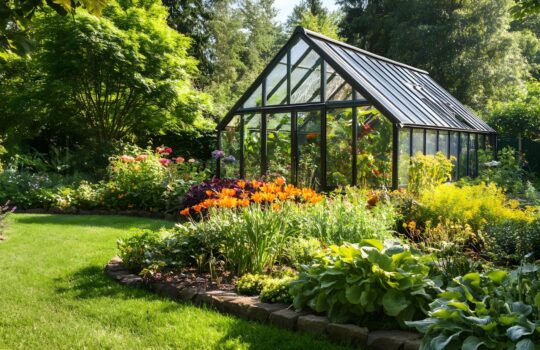
A green roof is simply a roof covered with a layer of vegetation, installed over a system of layers that provide drainage, root protection, and a suitable growing medium. Unlike a traditional flat roof covered in bitumen or metal sheeting, a green roof is alive — it breathes, retains water, and becomes a habitat for small organisms. This is far from a new idea: Scandinavian countries have used turf roofs to insulate homes for centuries, long before anyone used the word “sustainability.”
A living wall, also called a green facade or vertical garden, is a vertical building surface planted with vegetation. It can take the form of climbing plants trained along a support structure, modular panels holding rooted plants, or advanced hydroponic systems where roots grow without soil, fed by a nutrient solution circulating in a closed loop. Both roofs and walls share one core idea: they turn a dead, artificial surface into a living piece of the urban ecosystem.
Extensive and Intensive Roofs — Two Different Approaches
Not every green roof looks or functions the same way. The industry distinguishes between two basic types of systems, which differ in substrate depth, structural weight, and the level of maintenance they require.
Extensive Green Roofs
Extensive green roofs are the simplest and cheapest form of rooftop greening. The substrate layer is usually only 6 to 15 centimeters deep, planted with low-maintenance species such as sedums, mosses, and drought-tolerant grasses. Such a roof needs almost no irrigation or regular upkeep, which means it can be installed on a garage, bike shelter, or garden shed without reinforcing the load-bearing structure. It is an ideal starting point for private individuals and small projects that want something simple yet genuinely effective at improving the local microclimate.
Intensive Green Roofs
Intensive green roofs are an entirely different scale of undertaking — the substrate can be up to a meter deep, allowing not just perennials and shrubs but even small trees to be planted. Such roofs resemble fully-fledged gardens, complete with pathways, benches, and sometimes even small ponds, similar to those found in modernist developments across Scandinavia and Germany. They require a much sturdier building structure, an irrigation system, and regular horticultural maintenance, which makes them more expensive and more common in larger commercial or institutional developments.
Living Walls — Vertical Gardens for Dense Cities
Since roof space is often limited, urban architects and ecologists are increasingly looking sideways — at building facades, which represent an enormous, largely untapped potential in dense city centers. Living walls let us introduce greenery exactly where there is no longer any ground-level space for even a single planter.
Modular Panels and Hydroponic Systems
The most advanced form of living wall is the modular system, where ready-made cassettes containing growing medium and plants are mounted side by side to create a dense, green mosaic. In the hydroponic version, plants grow without soil, rooted in coconut fiber or mineral wool matting, while the system automatically doses water and nutrients. Installations like these can be found on the facades of modern office towers, inside shopping centers, and even indoors, where they serve as living decorative elements that also improve indoor air quality.
Climbing Plants on Support Structures
A simpler and cheaper solution is using climbing plants — ivy, Virginia creeper, honeysuckle, or hops — trained along wire mesh or cables fixed to the facade. This is a method known for generations, and it can easily be applied to a balcony, fence, or the wall of a garden shed. It requires patience, since fully covering a wall usually takes several growing seasons, but it remains by far the most accessible entry point for anyone wanting to try green architecture without a large budget.
Benefits for the Climate and the Building
Green roofs and walls are not just about aesthetics — they are a real tool for climate adaptation at the scale of a single building. The layer of substrate and vegetation acts like a natural sponge, absorbing a significant portion of rainwater and slowing its runoff into the sewer system, which matters enormously during the sudden, heavy summer downpours that are becoming increasingly common in our changing climate.
Beyond water retention, a green cover also improves a building’s thermal insulation — in summer it shields interiors from overheating, while in winter it reduces heat loss, translating into real savings on cooling and heating bills. A less-discussed but equally important benefit is that it can extend the lifespan of the roofing membrane two- or even threefold, because the vegetation layer protects the waterproof membrane from UV radiation and temperature swings, the main causes of its cracking and degradation over time.
Benefits for Nature and for People
Beyond the purely technical advantages, green roofs and walls matter enormously for life in the city — both human life and the life of creatures with six or eight legs. In densely built areas where there is little room for traditional greenery at ground level, a rooftop or facade can become the only available habitat for pollinating insects, birds, and small invertebrates, much like the other urban biodiversity projects we support.
The benefits for people are just as measurable:
noise reduction — the layer of substrate and plants dampens sound coming from the street, a benefit especially appreciated by residents of buildings along busy roads;
improved wellbeing — visual contact with greenery from an office or apartment window lowers stress levels and improves concentration;
aesthetics and property value — a green roof or facade increases a building’s appeal and can positively affect its market value;
better air quality — plants capture a portion of the particulate matter and other pollutants present in urban air.

Cities and Regulations Encouraging Green Infrastructure
More and more local governments worldwide are recognizing the potential of green roofs and introducing concrete incentives or even legal requirements. In many German cities, such as Stuttgart and Berlin, green roofs have long been required for new commercial developments, with local regulations offering discounts on stormwater fees for buildings equipped with such infrastructure.
Similar trends can be seen in Scandinavia, where Copenhagen introduced a requirement to green all new flat roofs, and in North America, where Toronto became the first city on the continent to pass a bylaw mandating green roofs on large new buildings. Poland’s own approach to this topic is still in its early stages, but more and more cities are introducing subsidies for green infrastructure and small-scale water retention under local environmental programs, showing that the same direction of change is taking hold here as well.
Challenges and Practical Considerations
Before deciding on a green roof or living wall, it is worth being aware of several important constraints. The first and most critical is structural load — wet substrate with vegetation weighs considerably more than a traditional roof covering, so any installation, especially an intensive one, requires a prior structural assessment by a qualified engineer.
Other important factors include:
initial cost — installation is more expensive than a conventional roof covering, though it pays for itself over time through energy savings and a longer-lasting roof;
irrigation systems — especially for intensive roofs and living walls, automatic irrigation is nearly essential during dry periods;
choosing native species — local plants adapted to the regional climate require less water and maintenance than exotic ones;
ongoing maintenance — even an extensive roof needs an inspection once or twice a year to remove unwanted self-seeded plants.
How to Start – From Small Steps to Bigger Change
You don’t need to be a property developer or own an office tower to bring a bit of this idea into your own surroundings. The simplest entry point is a mini green roof on a garden shed, garage, or birdhouse — just a few centimeters of substrate and a handful of sedums are enough to create a small but genuinely useful habitat for insects. On a balcony or terrace, a vertical garden of climbing plants or modular wall-mounted planters works beautifully, without taking up any valuable floor space.
Schools, housing cooperatives, and local businesses can go a step further and organize a shared rooftop garden — a wonderful educational project that brings a community together around a common goal. At the One More Tree Foundation, we believe that every patch of greenery, even one on a rooftop or building wall, matters for the climate and biodiversity of our cities. If you’d like to learn more about our projects and discover how you can get involved in building greener cities, visit our website and join the people planting the future — sometimes quite literally above their neighbors’ heads.
Related Articles
Categories
Recent Comments
Recent Posts
Tags
animal protection biodiversity climate change consumer's rights Consumerism consumism CSR eco education ecological education ecology educational workshops electronics employee volunteering employer responsibility environment environmental protection event-cleaning event-education event-flowers event-trees event-volounteering event-volunteering flower meadow global warming green pulse of silesia labour law mental health natural environment nature phenology planting-event planting_event production process recycling repair services smartphone spring Stellantis sustainability trash tree planting trees waste segregation well-being workplace