Plant one million trees with us!
Articles

Wild Pollinators: The Invisible Heroes We’d Lose Most of Our Crops Without

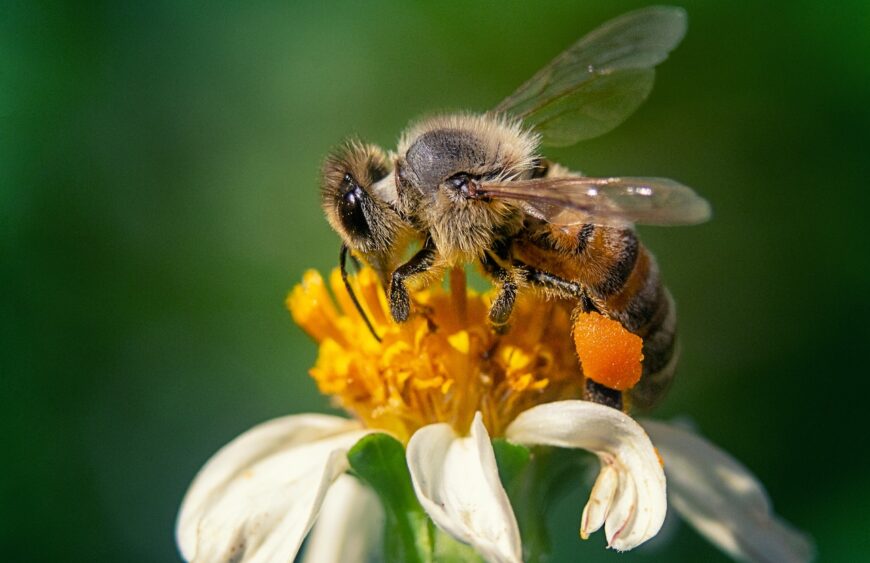
A closeup shot of a bee on a chamomile flower

When we think of pollinators, we almost automatically picture honeybees circling hives lined up at the edge of a meadow. Yet that is only the tip of the iceberg — Poland alone is home to more than 470 species of wild bees, and the group of pollinators also includes bumblebees, butterflies, hoverflies, and even some beetles. It is these lesser-known, often unassuming insects that are responsible for pollinating a large share of wild plants and many of the crops that end up on our plates.

In this article, we take a closer look at wild pollinators — who they actually are, why their role in the ecosystem cannot be replaced, what threats are causing many species to disappear at an alarming rate, and what each of us can do to reverse this trend, even with nothing more than a small balcony or a patch of garden.

What Wild Pollinators Are and How They Differ from the Honeybee

The term “wild pollinator” covers hundreds of insect species that, unlike the honeybee, do not live in large, organized colonies managed by humans. Most wild bees are solitary species — a single female builds the nest, gathers pollen, and lays eggs, with none of the division of labor characteristic of a hive. They nest in remarkably varied places: hollow plant stems, decaying wood, cracks in walls, and even empty snail shells, as the mason bee is known to do.

Alongside solitary bees, wild pollinators also include bumblebees, which form small, annual colonies of a few dozen to a few hundred individuals, as well as day- and night-flying butterflies and moths, hoverflies (flies that mimic wasps), and several beetle species that visit flowers. Each of these groups has slightly different food preferences and periods of activity, so together they form a pollination network that operates from early spring right up to the first frosts.

Why Pollinator Diversity Matters

A single plant species is often pollinated more effectively by a specific insect species than by the honeybee — bumblebees can work in lower temperatures and dimmer light, and some wild bees have even evolved specialized relationships with a single type of flower. The greater the diversity of pollinators in a given place, the more stable and resilient the entire local environment becomes, since losing one species does not automatically break the whole pollination chain.

Why Pollinators Are Essential for Ecosystems and Agriculture

It is estimated that around 75% of the world’s crop species depend to some degree on insect pollination, including apples, cherries, strawberries, cucumbers, pumpkins, and rapeseed. Although wild pollinators are rarely bred deliberately, in many cases they pollinate plants more effectively than the honeybee, since they visit more flowers in less time and cope better with unfavorable weather conditions.

Beyond their economic significance, pollinators play a fundamental role in maintaining the biodiversity of wild ecosystems — without them, many species of meadow, forest, and aquatic plants would be unable to reproduce, which would in turn strike at the entire food chain, from insect-eating birds to small mammals. Pollinators are therefore one of those small elements of nature whose disappearance would trigger a cascade of consequences reaching much further than might appear at first glance.

Threats Facing Wild Pollinators

Wild pollinator populations in Europe have been on a worrying downward trend for decades, and scientists point to several interconnected causes behind this phenomenon.

Habitat Loss and Landscape Simplification

The intensification of agriculture, the removal of field margins, mid-field shelterbelts, and flower-rich meadows in favor of large-scale monocultures deprives wild pollinators of both nesting sites and a diverse food base available throughout the growing season. A similar process is occurring in cities, where traditional, flower-rich lawns are increasingly being replaced by closely mown, uniform turf.

Pesticides and Chemical Contamination of the Environment

The use of plant protection products, including neonicotinoids, has documented negative effects on the nervous system and navigational abilities of pollinating insects, even at doses considered sub-lethal. Cumulative exposure to multiple different chemical substances across agricultural landscapes weakens entire populations, making them more susceptible to disease and other stress factors.

Climate Change and Disrupted Synchronization

Rising temperatures are shifting the flowering times of many plants, which can lead to phenological mismatch — a situation where a pollinator emerges from dormancy at a time when its preferred flowers have already faded or have not yet appeared. Extreme weather events, such as prolonged droughts or sudden heat waves, further disrupt the life cycles of many species.

How to Recognize Wild Pollinators Around You

Many of us pass wild pollinators every day without realizing it, because we automatically associate any black-and-yellow insect with a wasp or a honeybee. Yet observing a flowering border can reveal surprising diversity — mason bees with a metallic, dark-blue abdomen, fuzzy buff-tailed bumblebees visiting foxgloves, or hoverflies that can hover perfectly still in mid-air like tiny helicopters, despite looking like wasps.

Learning to recognize even a handful of the most common species — such as the red-tailed bumblebee, the buff-tailed bumblebee, or the red mason bee — can completely change the way we look at our own garden or balcony, and makes it easier to consciously choose plants that genuinely support local pollinators.


Supporting Wild Pollinators in Your Garden, Balcony, and Neighborhood

Supporting wild pollinators doesn’t require a large space or specialist knowledge — a handful of conscious decisions can be implemented in almost any setting.

  • Plant native nectar-rich species — such as phacelia, cornflower, oregano, lavender, or wild elder, flowering at different times of the season so pollinators have access to food from early spring through autumn.
  • Leave part of your garden “wild” — an unmown strip of grass, a patch of nettles, or a pile of branches are valuable nesting sites for solitary bees and winter shelters for many species.
  • Give up pesticides — even reducing the use of chemical products in favor of natural methods meaningfully lowers the pressure on local insect populations.
  • Build or hang an insect hotel — a structure made of hollow stems, drilled pieces of wood, and straw provides substitute nesting sites in areas lacking natural habitats.
  • Provide access to water — a shallow dish with pebbles for insects to land on is especially valuable during hot days.

Even a single pot of herbs on a balcony, if planted with well-chosen species, can become a stopover point along the route of a wild pollinator moving through an urbanized landscape.

The Role of Urban Greenery in Protecting Pollinators

Cities, contrary to appearances, can serve as important refuges for wild pollinators, provided their green spaces are planned appropriately. Parks, squares, home gardens, and roadside green strips, when planted with diverse, native vegetation, form a network of ecological corridors connecting fragments of natural habitat that would otherwise be isolated from one another. Unlike large-scale agricultural monocultures, well-designed urban greenery can offer flowering plants for nearly the entire year, making it a valuable complement to the rural landscape.

More and more local governments in Poland and across Europe are choosing to reduce the frequency of mowing urban lawns and to establish flower meadows in places once occupied by monotonous turf, a direct response to alarming data on the decline of pollinating insects.

How Environmental Organizations Support Wild Pollinators

Protecting wild pollinators requires action on multiple levels at once — from changes in agricultural law and restrictions on pesticide use, through population monitoring programs, to education and concrete work on the ground, such as planting native nectar-rich trees and shrubs or establishing flower meadows on degraded land. Environmental foundations play an important intermediary role here — linking scientific knowledge with practical action, reaching both companies looking for genuine ways to support biodiversity and residents who want to help right in their own surroundings.

Planting nectar-rich trees and shrubs, such as lindens, willows, or hawthorn, as part of larger afforestation projects is one of the most lasting ways to support pollinators — a single tree can flower for decades, providing food for successive generations of insects. You can read more about how we combine tree planting with biodiversity protection on the One More Tree homepage: https://one-more-tree.org/

Why Wild Pollinators Deserve Our Attention Today

Wild pollinators don’t need heroic gestures from us — they need consistent, small changes in how we design gardens, manage urban greenery, and run agriculture. Every flowering meadow, every unmown strip of lawn, and every nectar-rich tree planted today is a genuine contribution to the survival of insects on which far more depends than might first appear — from the stability of ecosystems to the food security of future generations.

We regularly cover similar topics related to protecting biodiversity and building ecosystem resilience in our educational articles, and you can read about opportunities to collaborate on greening and tree-planting projects on the One More Tree website: https://one-more-tree.org/

protected by reCAPTCHA Privacy Terms