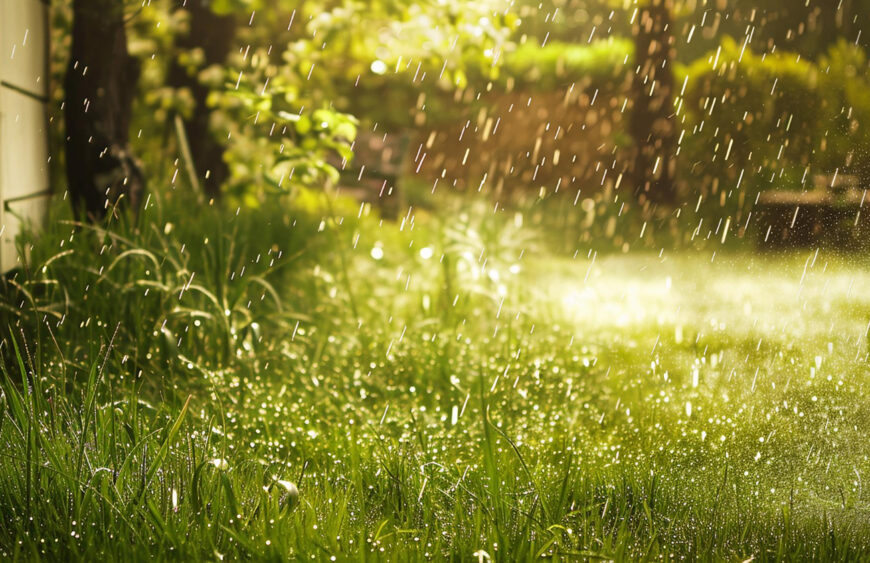
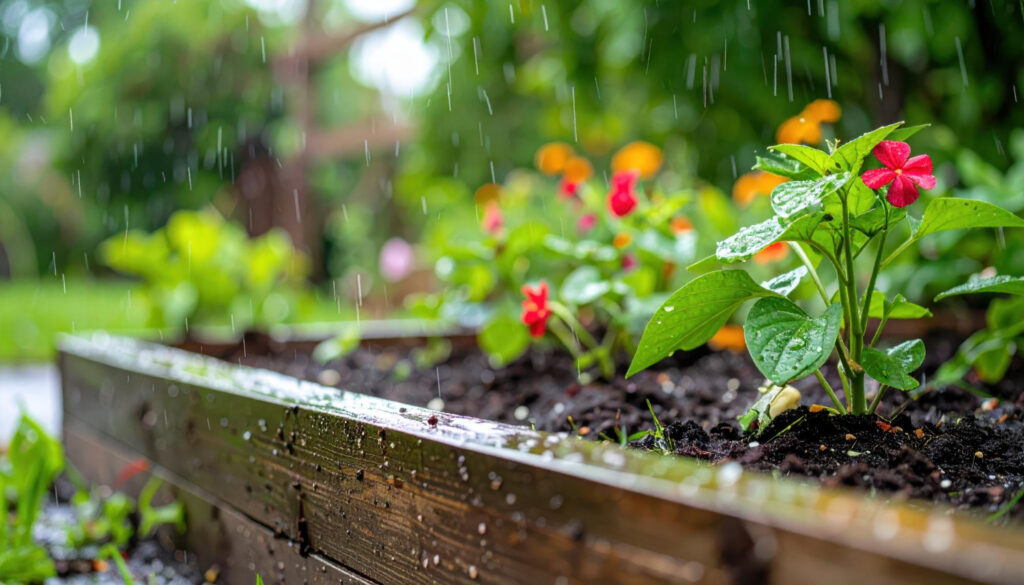
Watching a downpour rush off the roof, down the gutter and straight into a storm drain, we rarely stop to think that we are watching a valuable resource disappear. Instead of soaking into the soil and nourishing plants, rainwater vanishes within seconds into the sewer system, on its way to a river and eventually the sea. In cities, where concrete and asphalt cover an ever-growing share of the ground, this fuels two opposite yet equally dangerous problems: sudden flash flooding during heavy storms, and deepening drought once the rain stops. A rain garden, paired with simple home rainwater harvesting, is one of the most accessible tools we have to reverse this pattern.
This article walks through what a rain garden actually is, how to design and build one step by step, which plants thrive in these conditions, how to collect and reuse rainwater around the house, and what benefits this brings to local ecosystems and the climate. It is practical knowledge you could start applying this very weekend.
What a Rain Garden Is and How It Works
A rain garden is a shallow, deliberately sunken and planted depression that collects runoff from roofs, driveways, patios and other impervious surfaces, then lets it soak slowly into the ground. Unlike a garden pond, it is not a permanent body of water — after a heavy rain it fills up, then fully drains within roughly 12 to 48 hours, so it never becomes breeding habitat for mosquitoes. The secret lies in a carefully layered soil structure that filters out pollutants and slows the flow of water, instead of letting it race across the surface straight into the drain.
The underlying principle is simpler than it sounds: rather than designing landscapes to get rid of rainwater as fast as possible, we design them to hold water where it lands. As much as 70% of surface water pollution originates from stormwater runoff off streets, roofs and parking lots, according to the US EPA. A well-designed rain garden interrupts that pathway directly — properly built, it can filter out up to 90% of the nitrogen, phosphorus and other chemicals carried in runoff, and up to 80% of sediment, before the water reaches the water table.
Why Holding Rainwater Locally Matters
Reducing Flooding and Sewer Overload
In many cities, stormwater drainage systems were designed decades ago, under rainfall assumptions that no longer match what we experience today. Sudden, intense downpours — increasingly common as the climate changes — can overwhelm entire drainage networks within minutes, flooding basements, streets and transit stops. Every square metre of rain garden on private land takes pressure off the public system by catching water at the source — a far cheaper solution than expanding municipal sewer infrastructure, and one available to virtually any garden owner.
Recharging Groundwater Reserves
Water that slowly percolates through a rain garden’s soil layers eventually reaches the groundwater table, replenishing the natural reserves that feed wells, plants and forest ecosystems. This matters enormously in a warming climate with increasingly erratic rainfall patterns, where prolonged dry spells put growing pressure on aquifers everywhere. The more surface area we dedicate to capturing and absorbing rain, the more stable groundwater levels stay, directly strengthening local ecosystems’ resilience during drought. Our foundation shows on its tree-planting projects page just how tightly trees, soil health and water cycles are intertwined.
How to Design and Build a Rain Garden Step by Step
Building a rain garden requires no specialized equipment and no large budget — a small, dry rain garden can be started for a modest sum, using mostly your own labour. Here is a proven five-step process.
- Estimate the volume of runoff. Measure the roof, patio and driveway area that will drain into the garden. A widely used sizing rule is a rain garden of about 20–25% of the impervious catchment area at roughly 6 inches (15 cm) deep, capturing around 1.3 inches of runoff from a typical storm — proven across countless residential installations.
- Test how permeable your soil is. Dig a hole about 20–30 cm deep and fill it with water. If it drains within a few hours, the soil suits a dry rain garden; if water still stands after 24 hours, a wet-style rain garden with an added drainage layer and waterproofing works better.
- Choose the location carefully. A dry-style garden should sit at least 3 metres — further if you have a basement — from the foundation, to rule out moisture seeping into the walls. Contained or lined versions can sit much closer, even 50 cm away, provided they include their own overflow.
- Build the right layers. From the bottom up: a gravel drainage layer (15–20 cm), a coarse sand filtration layer (20–30 cm), a fertile planting layer of garden soil and sand at roughly 1:3 (20–30 cm), and a thin protective gravel or mulch layer on top (3–6 cm) to prevent erosion.
- Plant and connect the inflow. Water from the downspout is channelled into the garden through a pipe or open swale, directed to the deepest part of the basin. Plants go in zones, matched to the moisture level of each part.
Once built, a little annual maintenance goes a long way: removing dead plant material, cutting back growth in autumn, and confirming that water still drains within about two days of a storm.
Choosing Plants for a Rain Garden
The heart of any rain garden is its plants — species able to withstand two extremes: several hours, sometimes days, of waterlogged roots, and long stretches of drought between rains. That unusual dual tolerance is what sets them apart from typical garden plants and makes species selection worth getting right.
The Central Zone — Consistently Moist
In the lowest, most frequently flooded part of the garden, native species adapted to seasonally wet habitats perform best:
- sedges (Carex species) — grass-like and highly flood-tolerant,
- yellow flag iris — striking flowers in late spring and early summer,
- meadowsweet — fragrant and attractive to pollinators,
- purple loosestrife alternatives such as native loosestrife species — long-blooming and moisture-loving,
- black alder and shrub willows — as a woody element in larger installations.
The Edge Zone — Moderately Moist to Dry
On the outer slopes, where standing water is rare, reach for more drought-tolerant options such as ornamental grasses, coneflowers, sedums or black-eyed Susans, which handle both short flooding and long dry spells without complaint. The core rule is simple: the farther from the centre, the more drought tolerance a plant should have; the closer to the bottom, the more flood tolerance it needs. Whenever possible, choose native species — better adapted to the local climate, needing less maintenance, and supporting native insects and birds.

Harvesting Rainwater — Barrels and Tanks
A rain garden pairs perfectly with the second pillar of rainwater management: storage for later use. Rather than sending all roof runoff straight into the basin, part of it can first be captured in a tank, with only the overflow directed to the rain garden.
Above-Ground Rain Barrels
The simplest option is a rain barrel placed under a downspout, typically holding anywhere from 100 to several hundred litres. It is inexpensive, easy to install yourself, and more than sufficient for a small home garden or balcony. Fit the barrel with a tight lid to cut down on evaporation, debris and mosquito breeding.
Underground Tanks and Larger Systems
For bigger properties, underground cisterns with capacities from 2 up to several dozen cubic metres store far more water without taking up valuable surface space. Such systems are often plumbed to deliver water directly for:
- watering the lawn and flower beds during dry spells,
- flushing toilets, which alone can cut household drinking-water use by dozens of litres a day,
- washing the car, patio or garden tools,
- topping up a garden pond.
Incentives and Support for Homeowners
The good news for anyone considering an investment in on-site rainwater retention is that financial support increasingly exists to help. In Poland, for example, the national “Moja Woda” (My Water) programme, run through regional environmental protection funds, subsidises installations for collecting rainwater from roofs, driveways and pavements, storing it in tanks of at least 2 cubic metres, retaining it in the ground, and reusing it for garden irrigation. The subsidy can cover up to 90% of eligible costs, capped at roughly 8,000 PLN per property, for owners of single-family homes whose property has not previously received such support. Many other European countries run comparable schemes, so it is worth checking what is available locally.
Beyond any grant, the investment tends to pay for itself through lower water bills and a meaningfully reduced risk of flooding on your own property during intense storms.
Common Mistakes When Building a Rain Garden
Even a carefully planned project can fail if it skips a few fundamentals. The most frequent mistakes include:
- undersizing the garden relative to the volume of runoff it needs to handle, so the basin overflows during even moderate rain,
- placing it too close to the foundation without proper waterproofing, risking damp basements,
- skipping the soil permeability test, leading to standing water and mosquito breeding,
- choosing plants that aren’t suited to fluctuating moisture, which then wilt in drought or rot when flooded,
- omitting the erosion-control top layer, so heavy rain washes away soil and exposes plant roots.
Avoiding these pitfalls at the planning stage saves considerable repair work and disappointment later on.
A Rain Garden as Part of a Bigger Shift
A single rain garden on a single property might seem like a small gesture against the scale of climate change, but the cumulative effect matters enormously. When similar features appear across many properties in the same neighbourhood, their combined impact on local retention, water quality and microclimate becomes clearly measurable — fewer flooded streets, higher groundwater levels, more greenery resilient to drought. It is precisely the same philosophy our foundation applies through tree planting and the restoration of degraded land, because healthy soil, tree roots and well-designed greenery work together to hold water in the landscape far more effectively than any single element on its own.
It is also worth remembering that a rain garden is not just infrastructure — it is a living ecosystem. Flowering sedges and irises attract pollinators, moist soil supports amphibians and small invertebrates, and the whole composition becomes a micro-habitat for biodiversity in a spot that was previously just a lawn or a paved surface.
Closing Thoughts: Start in Your Own Backyard
Climate change and increasingly extreme weather — violent downpours alternating with long droughts — demand a response on many levels, from city planning to the individual choices each of us makes. A rain garden and a simple home rainwater harvesting system are among the few solutions any of us can implement ourselves, at relatively low cost, while still delivering a real, measurable benefit for our property and our wider neighbourhood.
If you are looking for ways to support local ecosystems on an even bigger scale, explore what the foundation is doing and see how we plant trees and restore water where ecosystems need it most. Every square metre of rain garden, every barrel under a downspout, and every tree planted today is an investment in the climate we leave for the generations that follow.
Related Articles
Categories
Recent Comments
Recent Posts
Tags
animal protection biodiversity climate change consumer's rights Consumerism consumism CSR eco education ecological education ecology educational workshops electronics employee volunteering employer responsibility environment environmental protection event-cleaning event-education event-flowers event-trees event-volounteering event-volunteering flower meadow global warming green pulse of silesia labour law mental health natural environment nature phenology planting-event planting_event production process recycling repair services smartphone spring Stellantis sustainability trash tree planting trees waste segregation well-being workplace